The Death of the Doorbell: Why Millennials Just Text "Here" Instead
Vibe Check
TL;DR
Driven by a desire to avoid household disruptions, Millennials and Gen Z are effectively retiring the traditional doorbell in favor of simply texting "here" upon arrival. This behavioral shift—often baffling to older generations—stems from a modern etiquette that views sudden, loud chimes as intrusive, especially in homes with anxious barking dogs, sleeping babies, or individuals sensitive to unexpected noises. Ultimately, bypassing the doorbell isn't an anti-social act but a highly considerate one, reflecting a new cultural standard that prioritizes a host's peace and forces the smart home industry to pivot toward silent smartphone notifications.
The Summary
The Short Version
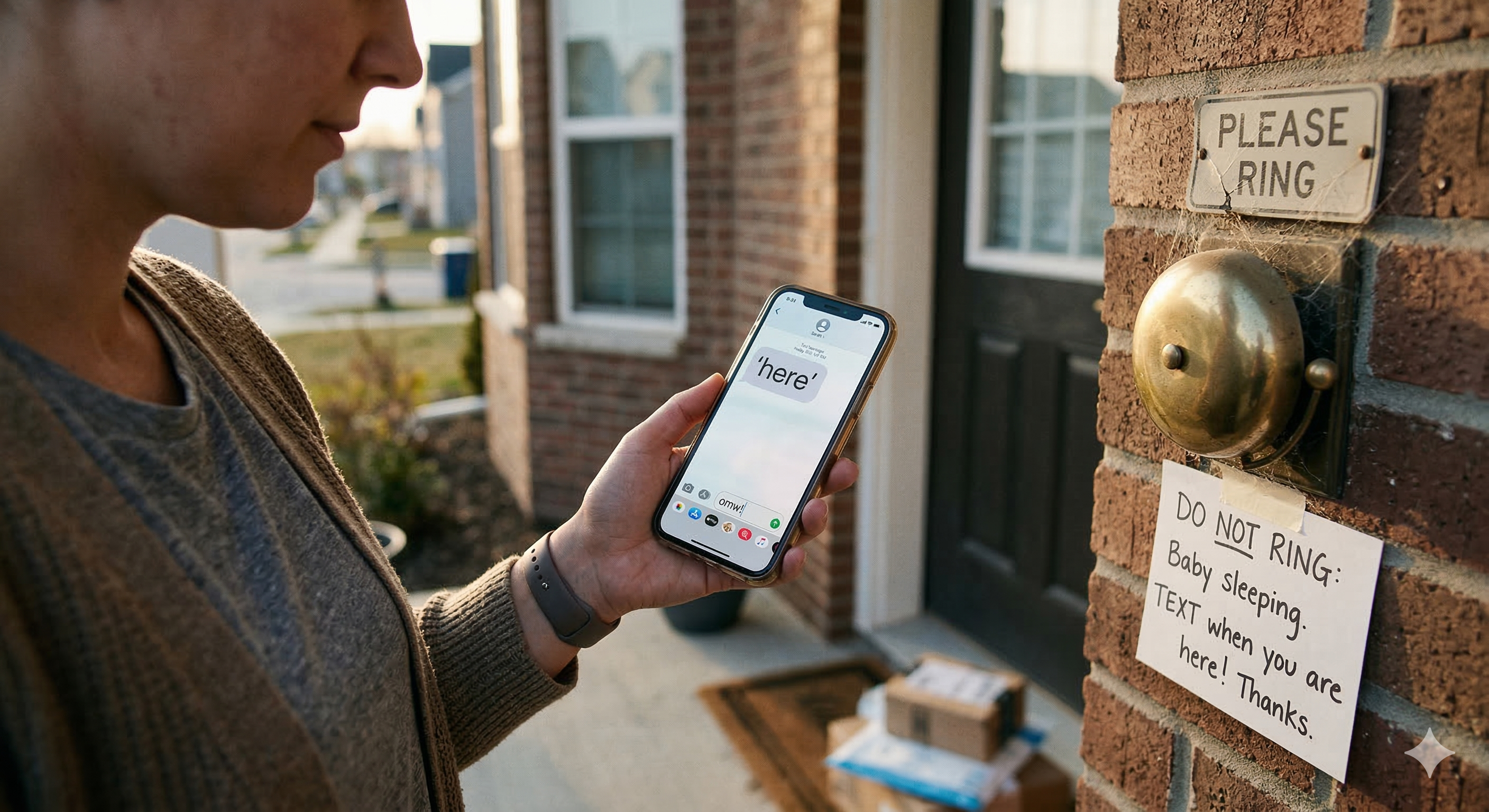
The sound of a doorbell ringing used to be a universal signal of hospitality, a cheerful announcement that friends, family, or a long-awaited package had arrived. Today, however, that same chime is increasingly viewed with suspicion, annoyance, or outright dread. Driven by a desire for frictionless communication and a hyper-awareness of household disruptions, Millennials and Generation Z are overwhelmingly abandoning the traditional doorbell. In its place, a new, silent standard of etiquette has emerged: pulling into the driveway and simply texting the word "here."
This behavioral shift highlights a massive generational divide in how we view the boundaries of the modern home. For Baby Boomers and older generations, marching up to the porch and firmly pressing the doorbell is still considered the polite, expected way to announce your arrival. But for younger adults who grew up with smartphones glued to their palms, the device acts as a universal remote control for their social lives. To them, an unannounced, loud ringing echoing through the house feels unexpectedly aggressive—a jarring demand for immediate attention rather than a polite greeting.
When examining the driving forces behind this trend, the loudest victims of the traditional doorbell are actually our four-legged friends. For millions of pet owners, a doorbell is an instant trigger for sheer chaos. A single press can send dogs into a frenzy of barking, disrupting remote work conference calls and shattering the peace of the household. By texting from the driveway, guests bypass this auditory trigger completely, allowing the host to secure the dog and open the door without the accompanying canine soundtrack.
Right behind pet owners in the anti-doorbell crusade are exhausted parents of young children. In the modern parenting rulebook, waking a sleeping baby is widely considered the ultimate social sin. This hyper-vigilance has led to a boom in handwritten "Do Not Ring" signs taped over doorbell buttons across the country. Friends, family members, and even delivery drivers are now implicitly expected to understand that a silent text message is the only acceptable way to maintain the fragile, hard-won quiet of naptime.
Beyond pets and babies, there is also a broader psychological element at play: the modern startle response. In an era where we can curate our notifications and control our digital environments, unexpected loud noises can invoke a mild fight-or-flight reaction. A sudden, booming chime can cause a spike in social anxiety, especially if the homeowner isn't expecting company. A text message, on the other hand, allows the host to receive the information on their own terms, drastically reducing social friction and sudden stress.
This cultural pivot is sending quiet ripples through the traditional home hardware industry. The classic, mechanical chime is rapidly becoming a relic of the past, forcing companies to pivot their strategies. Even the booming smart doorbell market has had to adapt; while devices from companies like Ring or Google still feature a physical button, their primary selling point is now the silent push notification sent directly to the homeowner's phone. The hardware industry is essentially capitulating to the reality that the screen, not the porch, is where the interaction actually begins.
Ultimately, the "death" of the doorbell shouldn't be mourned as a loss of community, but rather understood as an evolution of manners. Texting "here" isn't an anti-social act; it is actually a hyper-considerate one. It shows that the visitor respects the peace, privacy, and potential chaos of the household they are about to enter. As we continue to redefine the boundaries of our personal spaces, the familiar ding-dong is fading away, replaced by the soft buzz of a phone and the modern courtesy of a simple, four-letter text.
The Prompt
The Prompt That Started This Rabbit Hole
Write an article on millennials killing the doorbell industry by texting 'here'.
The Deep Dive
🤓This is the full AI-generated research paper. It's long, it's dense, and it's not for everyone. Proceed if you're a nerd, an insomniac, or both.
Introduction
The traditional physical doorbell, once an undisputed necessity of residential architecture and a universal symbol of domestic hospitality, is undergoing a profound cultural and functional obsolescence. For over a century, the act of pressing a button to trigger a mechanical or electronic chime inside a residence was the unquestioned, standard protocol for announcing an arrival.1 However, as the digital age has matured and reshaped human interaction, younger demographics—specifically Millennials and Generation Z—have effectively dismantled this historical norm. Instead of interacting with physical entryway hardware, these cohorts overwhelmingly prefer to announce their presence by sending a simple, asynchronous text message containing the word "here".3
This transition represents far more than a minor behavioral quirk or a fleeting trend in social etiquette. It is indicative of a massive sociological realignment regarding privacy boundaries, sensory management, and the frictionless efficiency of smartphone connectivity.4 The shift away from the mechanical doorbell is driven by an intricate combination of psychological anxiety, environmental management, and a fundamental change in how contemporary society views the threshold of the home. The home is no longer an open space awaiting unannounced visitors, but rather a carefully curated environment where external interactions must be scheduled, vetted, and approved via digital intermediaries.6
Furthermore, this behavioral metamorphosis has generated significant ripple effects across multiple economic and social sectors. It has decimated the consumer market for traditional, hardwired door chimes while simultaneously fueling a multi-billion-dollar boom in the smart video doorbell industry.8 In a fascinating paradox, these new smart devices are ironically utilized more for remote surveillance, package monitoring, and threat deterrence than for facilitating traditional face-to-face greetings.10
The phenomenon has also entirely rewritten the operational protocols of the gig economy, fundamentally altering the etiquette of food delivery and package drop-offs.12 By examining the historical evolution of home automation, the psychological architecture of "doorbell avoidance," the practical catalysts for digital signaling, the rapid evolution of smart home hardware, and the subsequent emergence of neighborhood surveillance networks, a comprehensive understanding of how the modern home interacts with the outside world can be established. This report explores the death of the doorbell industry at the hands of the digital "here" text, unpacking the myriad psychological, economic, and sociological factors driving this transformation.
Historical Evolution: From Mechanical Chimes to the Smart Home
To fully appreciate the death of the traditional doorbell, it is necessary to trace its origins and its gradual replacement by broader home automation ecosystems. The concept of the doorbell has held a firm position as a valued home necessity since the mid-1800s, initially manifesting as manual bells used to alert homeowners of a visitor's physical presence.1 The technological leap occurred in 1831 when Joseph Henry invented the first electrical doorbell, fulfilling the basic purpose of alerting occupants to external arrivals via electrical circuitry.2 By the 1930s, reliable electric mechanisms had largely replaced manual bells, and from that point until the early 21st century, homes were adorned with various styles and musical options, ranging from simple buzzers to elaborate, multi-pipe chimes that replicated the sounds of Big Ben or Westminster Abbey.1
For decades, the traditional wired doorbell—requiring low-voltage transformers and dedicated wiring—reigned supreme. Hardware and home improvement stores dedicated massive retail displays to these systems, allowing consumers to test various chimes and tones.9 However, the foundational concepts of the "smart home" were simultaneously taking shape, driven by a desire for greater environmental control. The earliest forms of home automation date back to the invention of home appliances between 1901 and 1920, but theoretical smart homes were largely the domain of science fiction, such as Ray Bradbury's cautionary automated home in There Will Come Soft Rains.14
The transition from mechanical isolation to digital integration began in the latter half of the 20th century. In 1966, the ECHO IV was developed as the first smart device capable of computing shopping lists and controlling home temperatures, followed in 1967 by the Honeywell Kitchen Computer, which was commercially unsuccessful due to its exorbitant cost and impracticality.14 True home automation began to penetrate the consumer market in the 1970s with the X10 protocol, which allowed devices to communicate over existing electrical wiring.15 The 1980s saw the introduction of simple sound-activated devices like "The Clapper," and by the late 1990s, the concept of gerontechnology emerged to combine technology with the needs of senior citizens.14
The critical inflection point for the doorbell industry occurred in the early 2010s. Before 2010, closed-circuit television (CCTV) systems connected to doorbell intercoms were prohibitively expensive and restricted to luxury estates.1 The democratization of this technology arrived in 2013 with the introduction of DoorBot—later rebranded as Ring—which allowed consumers to use their smartphones over Wi-Fi or Bluetooth to see and interact with visitors.1 Since the debut of Ring, the consumer market has been perpetually saturated with smart doorbells, fundamentally altering the trajectory of the industry.1
As smart home technology evolved to include the Internet of Things (IoT), artificial intelligence, and centralized control via smartphones, the standalone mechanical doorbell became an anachronism.15 The traditional 18-volt wired doorbell market has subsequently contracted significantly. Consumers seeking clean, modern replacements for aging, yellowed plastic chimes now find limited options, as legacy manufacturers like NuTone and HeathZenith scale back production of high-end mechanical models.9 Products that were once household staples, such as the Honeywell Standard Wired Door Chime (RCW102N), have been discontinued, marking the end of an era where traditional sound quality and mechanical hammers hitting metal plates were the primary selling points for entry systems.17
The Psychological Architecture of Doorbell Aversion
The abandonment of the mechanical doorbell by younger generations cannot be attributed solely to the availability of new technology; it is deeply rooted in shifting psychological paradigms and the management of chronic anxiety. To understand the intense aversion Millennials and Generation Z harbor toward the sound of a ringing doorbell, the phenomenon must be examined through the lens of classical conditioning, social energy management, and the evolution of domestic boundaries.
Classical Conditioning and the Aversive Pavlovian Response
In the realm of behavioral psychology, Pavlovian conditioning—or respondent conditioning—is a fundamental learning process where a neutral stimulus is paired with an unconditioned stimulus to create a conditioned response.19 In the context of modern residential life, the doorbell has ceased to act as a neutral or positive herald of expected guests. Because modern social interactions are meticulously coordinated via smartphones, expected visitors almost never use the physical doorbell; instead, they text upon arrival.4 Consequently, the sound of the chime has been conditioned into a trigger for anticipatory anxiety, as it is almost exclusively associated with negative, intrusive, or unknown occurrences.20
Psychological studies regarding human aversive Pavlovian conditioning demonstrate that unpleasant sounds can serve as highly effective unconditional stimuli, generating strong physiological responses.22 Traditional doorbells are intentionally designed to be loud, shrill, and penetrating to ensure they are heard throughout a structure.4 In the absence of positive reinforcement (i.e., the arrival of a desired friend), this acoustic profile acts as an aversive stimulus. Observers note that the chime triggers immediate physiological startle reflexes, encompassing increased heart rate, heightened skin conductance, and startle blink modulation.22
Individuals frequently describe the sound of a doorbell as causing them to jump, experience racing hearts, or suffer "mini heart attacks".23 The term "doorbell anxiety" has emerged to describe this specific phobic reaction, linking the unexpected auditory stimulus to past negative experiences, social anxiety, or the dread of forced interaction.25 For many, the sound is perceived as inherently aggressive, transforming the home from a sanctuary of relaxation into a space vulnerable to sudden, uncontrollable external demands.24 When the individual is able to differentiate the sound of the doorbell from other notifications—an example of stimulus discrimination—the specific dread associated with the entryway is activated.20
Social Energy Management and Interaction Control
The preference for asynchronous digital communication over immediate physical confrontation is also deeply tied to the management of social energy, particularly for introverted individuals. The act of ringing a doorbell removes all agency from the occupant; it is a blunt demand for immediate physical presence and real-time social interaction.7 Conversely, a text message serves as a discreet, non-intrusive notification that places the locus of control entirely in the hands of the recipient.6
Research into the psychology of introversion emphasizes that social interaction requires a finite reserve of energy, and many people must carefully manage this energy to function optimally.28 The "here" text functions as a crucial psychological buffer. It provides a window of time for the occupant to mentally prepare for a social encounter, conclude a current task, or manage their emotional transition before physically opening the door.23 Individuals who prefer texting over calling generally understand this intuitively; they are not necessarily avoiding connection, but rather optimizing for it by controlling the pace of the interaction.28
By announcing an arrival via text, the visitor respects the boundary of the home and grants the host the autonomy to dictate the exact moment the interaction begins.6 For individuals suffering from diagnosed social anxiety, this buffer is not merely a preference but a vital coping mechanism that severely reduces the anticipatory dread associated with unanticipated conversational demands.21
The "Stranger Danger" Paradigm and the Dread of Awkward Encounters
The aversion to the physical doorbell is further compounded by a generational desire to avoid awkward, unpredictable encounters.31 During their formative years, Millennials and Generation Z were heavily conditioned by the "stranger danger" paradigm, internalizing the idea that answering the door to an unknown person carried inherent risks.4 This early conditioning has lingered into adulthood, fostering a persistent sense that an unexpected ring signals a potential threat, scam, or, at best, an aggressive solicitor.4
Furthermore, when visiting a residence shared by multiple occupants—such as a family home, an apartment with roommates, or a multi-generational household—ringing the doorbell acts as a broadcast signal to the entire structure.7 The visitor runs the risk of the door being answered by an unknown third party, such as a friend's parent, an unfamiliar sibling, or a random roommate.31 For younger demographics, who value targeted, direct communication, navigating pleasantries with an unintended recipient is viewed as an unnecessary and uncomfortable social friction.31 As one young adult articulated, ringing a bell and dealing with an unknown person answering the door is a scenario they simply "do not want to deal with," finding it "weird" and anxiety-inducing.31
Texting bypasses the communal alert system entirely, ensuring that only the specific person the visitor intends to see is notified of the arrival.31 Visitors also harbor anxieties about approaching the wrong house; pressing a doorbell at the wrong address guarantees a highly uncomfortable interaction with a stranger, whereas sending a text ensures confirmation of location with zero risk of public embarrassment.4
Generational Communication Paradigms
The divide regarding physical entry protocols reveals stark generational differences in communication etiquette and emotional responses to unexpected stimuli. While older generations view the doorbell as a functional utility, younger generations view it through the lens of their digital-first upbringing.
The Divergence of Emotional Responses
Sociological surveys and observational data highlight a clear gradient in how different age cohorts react to the sound of an unexpected knock or ring.32
Demographic Cohort | Primary Emotional Response to Unexpected Doorbell/Knock | Key Motivations and Behavioral Reactions |
Baby Boomers | Annoyance, Irritation | Least likely to feel afraid (<10%). Highly annoyed by solicitors but generally willing to answer the door or verbally challenge the visitor. Credited with popularizing "No Soliciting" signs. 32 |
Generation X | Caution, Disruption | Moderate caution. Likely to check peepholes or legacy security systems before deciding to engage. View the disruption as an inconvenience rather than a threat. 32 |
Millennials | Anxiety, Panic, Avoidance | High rates of fear (~15%). Frequently experience the sound as a "jump scare." Common reactions include hiding, remaining silent, or texting friends to verify if someone was expected. 26 |
Generation Z | High Fear, Confusion, Novelty | Highest level of fear (>20%). Perceive knocks as severe anomalies due to the extreme rarity of the event in their heavily digitized social lives. Often confused by the occurrence. 4 |
The Millennial and Generation Z reaction is deeply intertwined with their broader communication preferences. A survey by LivePerson investigating the digital lives of these younger demographics found that nearly 75 percent of respondents would rather text than talk on the phone.34 The smartphone has become an extension of the self, and text messaging represents the default mode of interaction due to its convenience, immediacy, and non-intrusive nature.6 Only 19 percent of Millennials surveyed rank email as a preferred communication mode for urgent matters, preferring the instantaneous but silent connection of a text.35
The Evolution of Etiquette
In the context of evolving cultural norms, the digital landscape has gradually replaced face-to-face interactions with online connections, shifting the definition of social etiquette.6 The idea of physically pressing a doorbell button is increasingly viewed as an outdated and mildly aggressive imposition.6 To many, a ringing bell communicates nothing more than the blunt fact that "someone is here," whereas a text message provides context, identifies the specific visitor, and allows for the seamless transfer of additional information (e.g., "I'm outside in the blue car," or "I brought food").7
The integration of social media and mobile connectivity into everyday life has cemented this behavior. Reports analyzing Millennial and Gen Z spending habits, such as the Spendfluence report by Chime and Talker Research, demonstrate that younger demographics spend upwards of three hours a day browsing products on mobile platforms, seamlessly integrating their digital and physical lives.36 The reliance on #FinTok for financial advice and the heavy use of mobile platforms for commerce underscore a generation that operates primarily through screens.36 When this heavily digitized lifestyle is applied to physical visitation, the asynchronous text is the only logical, socially appropriate mechanism for announcing an arrival without violating the established digital boundaries.6
Environmental Friction: The Home Ecosystem Under Siege
Beyond the profound psychological factors, the obsolescence of the doorbell is driven by highly practical environmental considerations within the domestic sphere. The modern home is a carefully balanced ecosystem, and the blaring, un-mutable chime of a traditional doorbell represents an uncontrolled variable that shatters this equilibrium.4
The Pet Factor and Canine Sensitization
One of the most frequently cited practical reasons for enforcing a strict "no doorbell" policy is the presence of household pets, particularly dogs.24 Domesticated animals frequently exhibit extreme, territorial responses to the sudden, loud sound of a doorbell.31 The auditory cue serves as an immediate trigger for protective behavior, resulting in frantic barking, persistent howling, and heightened physiological arousal.31
This acoustic disruption transforms a calm residential environment into a chaotic space in a matter of seconds.31 Residents report that their pets often become so heavily sensitized to the specific frequency of a doorbell that even a simulated chime originating from a television commercial or a laptop video can cause the animal to go "berserk".31 Managing an overstimulated, highly reactive pet while simultaneously attempting to greet a visitor at the threshold creates an inherently stressful and disorganized beginning to any social interaction.31 Visitors, acutely aware of this dynamic, actively choose to text "here" as a basic courtesy to preserve the acoustic peace of the household and spare the host the burden of wrangling a frantic animal.4
The Sanctity of Infant Sleep
Similarly, parents of infants and toddlers harbor a deep, functional animosity toward the physical doorbell. The careful orchestration of a child's sleep schedule is a paramount concern for new parents, and this delicate balance is easily derailed by a delivery driver or an unannounced visitor pressing the button.24 The frustration regarding disrupted naps is so acute that a robust subculture of "do not ring" signage has emerged.40
Parents frequently resort to taping elaborate, explicitly clear, and sometimes overtly hostile notes over their physical doorbell buttons, pleading with or threatening visitors to refrain from pushing them.40 Notes reading "Please no knocking, please no bell, if you wake our sleeping baby we'll see you in hell" or signs entirely covering the physical mechanism illustrate the desperation parents feel in attempting to control the acoustic environment of the home.40
In stark contrast, the text message is delivered silently to a device that is perpetually kept on vibrate or "silent mode" by the modern user.30 The text circumvents the environmental disruption entirely, allowing the host to receive the notification without waking a child, disturbing a pet, or interrupting an ongoing task.6 The desire for this "silent mode" interaction is so strong that consumers are increasingly seeking out specialized silent alarms and keyless entry locks designed specifically for bedrooms and apartments, prioritizing visual or haptic feedback over auditory disruption.42
The Gig Economy and the Transformation of Delivery Etiquette
The generational aversion to the doorbell and the rise of the digital "here" notification have fundamentally rewritten the operational procedures of the modern gig economy. For the millions of independent contractors working for food delivery services (e.g., DoorDash, UberEats, Grubhub) and package logistics companies, the physical interaction at the threshold of the home has been completely re-engineered.13
The "Leave at Door" Mandate
Prior to the technological maturation of delivery applications, the standard protocol for any delivery involved knocking loudly or ringing the doorbell and waiting to physically hand the goods to the occupant. Today, this behavior is viewed by the consumer base as a severe breach of etiquette.12 The default instruction for the vast majority of modern digital orders is "Leave at door".12
Crucially, within the subculture of gig workers, "leave at door" is universally interpreted to mean exactly that: drop the item, take a photographic proof of delivery through the app, and vanish without making a sound.13 Delivery drivers express overwhelming consensus across industry forums that ringing a doorbell without explicit written instructions to do so is a major operational error.44 Drivers who mistakenly ring the bell on a "leave at door" order frequently report being yelled at by customers, receiving reduced tips, and suffering negative app ratings.12
Delivery Instruction | Driver Interpretation & Standard Action | Consumer Expectation |
"Leave at Door" (Default) | Place item securely, take photograph in app, leave silently. DO NOT ring or knock under any circumstances. 13 | Automated app notification will signal arrival. Total silence is expected. 13 |
"Hand to Me" / "Meet at Door" | Approach door, wait, knock/ring only if required to summon the customer. Treat as "leave at door" but with a knock. 13 | Physical handover of goods. Brief interpersonal interaction. 13 |
Explicit: "Please Ring/Knock" | Place item, ring the bell or knock firmly, and depart. 13 | Specific auditory confirmation desired (often due to lack of smartphone proximity). 45 |
Explicit: "Do NOT Ring" | Absolute silence required. Strict adherence to stealth drop-off. Ratio of these instructions to "please ring" is over 20 to 1. 12 | Sleeping children, reactive pets, or severe social anxiety present. High penalty for failure. 12 |
The reasoning aligns perfectly with the environmental factors previously discussed. Gig workers are acutely aware of the risk of waking babies or triggering aggressive dog responses.12 Furthermore, customers who are deeply concerned about the status of their food or packages have a relatively simple mechanism through the application to monitor the delivery.44 Applications provide granular, GPS-based updates to the consumer: notifications trigger when the driver is approaching, arriving, and when the delivery is complete.44 Because the smartphone handles the entire alerting process, the mechanical doorbell is rendered entirely redundant. For gig workers—who often suffer their own anxieties navigating unfamiliar neighborhoods or attempting to build financial independence while managing flexible schedules—the silent drop-off is a mutually beneficial arrangement.13
Market Ramifications: The Boom of the Smart Surveillance Apparatus
The abandonment of the doorbell as a primary interpersonal communication tool has generated massive disruptions within the hardware manufacturing sector. While the traditional mechanical and electronic chime market is fading into obscurity, the smart video doorbell market is experiencing explosive, exponential growth.8
A Paradox of Utility
In a fascinating paradox, while younger generations loathe the act of ringing a doorbell, their demographic, along with older cohorts, is fueling an unprecedented boom in the sales of smart doorbells.8 This apparent contradiction is resolved by understanding the shifting utility of the device. The smart doorbell is no longer marketed or utilized primarily as a tool for visitors to announce their arrival; rather, it functions as a localized security apparatus, an always-on surveillance camera, and a remote property management tool.10
Explosive Market Growth and Segmentation
The global smart doorbell market size is staggering in its growth trajectory, driven by rising consumer demand for home security, increasing urbanization, and integration with broader smart home ecosystems.8 Valued at approximately USD 4.28 billion to USD 5.57 billion between 2023 and 2025 (depending on the scope of the analytical metric), the market is projected to surge to anywhere between USD 15.48 billion and USD 63.01 billion by the early to mid-2030s.8 The Compound Annual Growth Rate (CAGR) exhibits robust expansion, consistently estimated between 15.73% and 23.8% across various industry reports.8
Smart Doorbell Market Metric | Base Valuation (2023 - 2025) | Projected Valuation (2030 - 2035) | Estimated CAGR | Key Market Drivers |
Global Market Total | ~$4.28B - $5.57B 49 | ~$13.56B - $63.01B 8 | 15.7% - 23.8% 8 | Home security concerns, package theft (porch piracy), real-time video feeds, two-way audio. 8 |
Wireless Segment | Dominant Share (~67.3% in 2025) 54 | Continued Market Leadership | >35.5% 55 | Lack of complex wiring, DIY installation ease, renter flexibility, improved battery life. 56 |
Wired Segment | Minority Share | Steady Niche Growth | ~31.6% 55 | Constant power supply, new commercial/residential builds, lower initial unit cost. 55 |
This growth is largely dominated by a few major tech conglomerates. Alphabet Inc. (Google Nest) and Amazon.com Inc. (Ring) hold significant market concentration, alongside other key players like Arlo Technologies, ADT Inc., and Hangzhou Hikvision.49 In December 2020 alone, Amazon sold over 400,000 Ring devices globally, highlighting the massive consumer appetite for doorstep surveillance.1
The primary catalyst for this adoption is not hospitality, but anxiety regarding property crime. The rising frequency of package theft in urban environments—exacerbated by the reliance on e-commerce—has made remote video monitoring a functional necessity for many households.48 Advancements in artificial intelligence, including person detection, facial recognition, and automated package recognition, have transformed these devices into sophisticated security nodes.8 Furthermore, the integration of these cameras with voice assistants (Alexa, Google Assistant, Apple HomeKit) ensures that the homeowner is perpetually connected to their threshold, regardless of their physical location.56
The Privacy Friction of the Digital Panopticon
While homeowners embrace this technology for peace of mind, visitors—particularly the Millennial and Gen Z demographics who already harbor interpersonal doorbell anxieties—find the presence of smart doorbells deeply unsettling.10 The knowledge that a digital eye is recording their approach, capturing their audio, and transmitting their image directly to a homeowner's smartphone introduces a new layer of surveillance anxiety.31
Individuals express intense discomfort at being recorded during private moments on the porch, such as checking their teeth, adjusting their clothing, or having private conversations before the door opens.31 The presence of the camera reinforces the preference to remain safely in a vehicle or on the public sidewalk and send a "here" text, completely avoiding the digital panopticon mounted on the doorframe.31 This creates a bizarre cultural dynamic where the homeowner invests heavily in a device designed to monitor the door, while the guest actively utilizes digital communication to avoid triggering that exact device.
The Surveillance Paradox and Neighborhood Paranoia
The widespread deployment of smart video doorbells has catalyzed a complex sociological shift in how communities perceive safety, resulting in a phenomenon that researchers define as a local misinformation crisis and the "gamification of paranoia".61 While these devices are explicitly marketed as tools to enhance peace of mind, empirical evidence suggests they frequently achieve the exact opposite, plunging users into a state of continuous, hyper-local anxiety.10
Filling the Local News Vacuum
The rise of connected neighborhood platforms—most notably Amazon's Ring Neighbors, Nextdoor, and Citizen—has occurred simultaneously with the catastrophic decline of traditional local journalism in the United States. Since 2005, over 2,500 local newspapers have ceased operations, leaving approximately 70 million people living in counties without dedicated local reporting.61 Neighborhood surveillance applications have quietly stepped in to fill this vast information vacuum, fundamentally reshaping how residents interpret the safety of their streets.61 With user bases numbering in the tens of millions—Nextdoor boasting 69 million users, and Citizen and Neighbors each possessing 10 million—these platforms provide a steady, uncurated stream of localized data directly to the smartphones of residents.61
The Gamification of Fear and Hyper-Vigilance
The psychological impact of this constant data stream is profound. Homeowners who install a smart doorbell to feel secure are suddenly bombarded with push notifications detailing every minor infraction, lost pet, and perceived suspicious activity within a multi-mile radius.61 This creates an addictive sense of urgency and a heavily skewed perception of reality.61 The home is no longer looking inward for comfort; it has been turned outward, invading the privacy of the street and treating every passerby as a potential threat.63
The visual nature of these platforms is highly manipulative. A fragmented, out-of-context video clip captured by a smart doorbell showing a stranger walking near a driveway, or a car driving slowly, is easily misconstrued as an imminent threat.61 Researchers analyzing these networks note that "suspicious but noncriminal behavior" entirely dominates the discourse. In one sociological sample of the Neighbors app in Brookhaven, Georgia, over 54% of shared posts were categorized as raising alarms about merely "suspicious" activities rather than actual crimes.61 Furthermore, false alarms generated by passing cars, animals, or falling leaves trigger constant alerts, leading to unnecessary anxiety.11
This dynamic gamifies paranoia, encouraging a culture where users feel a civic duty to report minor anomalies, thereby keeping the entire network in a state of elevated fear.11 Users frequently confess that their mental health deteriorated after installing the apps, as they transitioned from being blissfully ignorant of minor neighborhood events to being hyper-aware of every shadow and unfamiliar vehicle.11 The subjective sense of security decreases dramatically, even if the objective crime rate remains unchanged or drops.10
Participatory Surveillance and Bias
Furthermore, the architecture of these smart doorbell networks encourages a dangerous form of vigilantism and participatory surveillance. Users act as "prosumers"—simultaneously consuming fear-based content and producing it by uploading their own doorbell footage.61 Advocacy groups, such as the Electronic Frontier Foundation, warn that this creates a high-speed digital mechanism for residents to make snap, often biased judgments regarding who does and does not "belong" in a specific neighborhood.61
This crowdsourced surveillance is actively integrated with formal law enforcement. Over 2,000 police and fire departments have established partnerships with Amazon's Ring network, gaining specialized access to neighborhood portals and automated alerts.61 In locations like Brookhaven, officers sign up for automated alerts directly from the Neighbors app, effectively turning user-reported "suspicious" activities into law enforcement data.61 This blurs the line between private residential security and state surveillance. The vocal minority of users who monopolize these local message boards effectively dictate the safety narrative of the community, turning innocuous encounters into viral incidents of local panic.61 The doorbell, therefore, has evolved from a simple chime into a formidable node in a distributed, citizen-operated surveillance grid, further explaining why younger demographics are so hesitant to interact with it.
Cultural Manifestations and Memeification
The transition away from the physical doorbell is not merely an underlying behavioral trend; it has become a highly visible cultural touchstone, extensively documented, parodied, and validated across digital media. The "doorbell anxiety" phenomenon is a recurring, viral theme in internet meme culture, serving as a unifying inside joke for Millennials and Generation Z.6
Comedians and content creators frequently generate millions of views by acting out the stark generational differences in receiving unexpected visitors.33 A typical viral video, such as those produced by comedian Jake Lambert, portrays a Baby Boomer casually opening a door to greet a stranger, juxtaposed against a Millennial diving behind a sofa, crawling across the floor to avoid window sightlines, and frantically texting their partner to see if anyone was expected.33 This hyperbole rings true for the demographic; social media comment sections beneath these videos are flooded with users corroborating the behavior, sharing anecdotes of absolute silence, muted televisions, and genuine panic induced by a rogue delivery driver or neighbor pressing the bell.33
This memeification serves a vital sociological purpose: it normalizes the anxiety and establishes new parameters for social etiquette.6 By sharing these experiences in a comedic format, younger generations validate their collective preference for controlled, asynchronous communication.6 It transforms a potentially isolating psychological quirk—the fear of a ringing bell—into a shared generational trait.33 The text message "here" has therefore transcended its practical utility; it has become a cultural signifier, an emblem of a generation that values digital efficiency, strict boundary management, and the sanctity of the uninterrupted home environment.3 When the concept of "millennials killing doorbells by texting here" itself becomes a prompt for articles and memes, it solidifies the behavioral shift in the cultural zeitgeist.3
Conclusion
The traditional mechanical doorbell, once the primary acoustic interface between the private sanctuary of the home and the public sphere, has been systematically rendered obsolete by the advent of mobile connectivity and profound shifts in generational psychology. For Millennials and Generation Z, the sudden, demanding chime of a doorbell represents an unwelcome intrusion. It triggers aversive Pavlovian anxiety, disrupts carefully managed environmental ecosystems containing pets and sleeping children, and forces unscripted, highly awkward social interactions. The simple text message "here" has usurped the mechanical button, offering a silent, efficient, and highly controllable alternative that respects the autonomy of both the visitor and the host.
Concurrently, the physical hardware of the entryway has undergone a radical and highly lucrative transformation. As legacy chimes from legacy manufacturers fade into obscurity, the smart video doorbell market has exploded into a multi-billion-dollar industry. However, this technology has fundamentally altered the purpose of the device. No longer a tool of hospitality, the modern smart doorbell is a security node in a vast, citizen-driven surveillance network. While it provides unparalleled remote management capabilities to combat issues like porch piracy, it paradoxically fuels hyper-local anxiety, gamified paranoia, and a profound erosion of community trust through apps like Nextdoor and Neighbors.
Ultimately, the demise of the traditional doorbell industry reflects a broader, permanent societal trajectory. The modern home is increasingly viewed as a heavily fortified sanctuary, both digitally and physically. Access to this sanctuary is no longer granted by a physical button on a porch, but by an asynchronous digital ping, filtered through the indispensable medium of the smartphone. The "here" text is not merely killing an industry; it is redefining the very concept of the threshold.
Works cited
Doorbell Cameras in the U.S. – Statistics & Facts, 2021 - SafeHome.org, accessed
Sources
The Ingredients
- 1 Smart Doorbell Market Outlook 2025-2032
- 2 Whatever happened to regular wired doorbells and door chimes? Anything nice or tasteful out there? - Reddit
- 3 Smart doorbell cameras pose a danger to our society - AMS Institute
- 4 A Ring of Paranoia. Selling fear through Neighborhood… | by ganpy - Medium
- 5 Leave at door does not equal don't ring doorbell : r/DoorDashDrivers - Reddit
- 6 If it's a leave at door order should we knock? : r/UberEatsDrivers - Reddit
- 7 The History of Smart Homes - afcdud
- 8 The Evolution of Smart Home Technology | by Tod Caflisch - Medium
- 9 The Evolution of Smart Home Technology
- 10 Types of Doorbells Explained: Wired, Wireless, Smart & More - GM Modular
- 11 Honeywell Standard Wired Door Chime, RCW102N1006/N
- 12 Pavlovian conditioning | Health and Medicine | Research Starters - EBSCO
- 13 Classical Conditioning And Conditioned Response - BetterHelp
- 14 Anticipatory Anxiety: Why The Fear Is Often Worse Than The Reality | Klarity Health, Inc
- 15 The use of an unpleasant sound as an unconditional stimulus in a human aversive Pavlovian conditioning procedure - PubMed
- 16 Texting vs. doorbell : r/Millennials - Reddit
- 17 Generation Y explain why they don't use doorbells anymore! - 104.8 Channel 4 FM
- 18 Why Your Heart Races At Every Door Knock: Understanding And ...
- 19 15 things millennials won't spend their money on - Moneywise
- 20 Classical Conditioning – Psychology - Open Text WSU
- 21 Psychology says people who prefer texting over phone calls aren't antisocial—they typically have these 8 unique strengths - Silicon Canals
- 22 Why Texting Beats Phone Calls: Relate to the Struggle? - Lemon8
- 23 Is phone reluctance an ADHD thing or is there something wrong with me? : r/adhdwomen
- 24 The Doorbell Debate: Is the 'Here' Text Out to Replace Doorbells? | The Buzz Magazines
- 25 52 percent of people won't answer the door for a stranger. A cop ...
- 26 Comedian's hilarious video has Millennials sharing their own unique 'doorbell phobia' stories - Upworthy
- 27 Communicating with Generation Z: Everything You Need to Know - Keystone
- 28 Millennials Say, "Can We Talk Instead of Text?" - Bentley University
- 29 Chime Unveils Social Media Impact on Shopping Habits in 2024 with “Spendfluence” Report
- 30 Chime Declares 2024 as “The Year of #FinTok”
- 31 How to Train a Dog Not to Run Away: Safe Guide to Off-Leash Freedom - Sniffspot
- 32 What is something you have a Pavlovian response to? : r/AskReddit
- 33 Whyyyyy do people who deliver packages have to ring the doorbell! : r/NewParents - Reddit
- 34 only ADHD and anxiety, but I can't stand phone calls : r/adhdmeme - Reddit
- 35 Best Ironic Alarm [Updated On: March 2026]
- 36 1080P Ring Doorbell High Definition Security Camera Wireless Doorbell Camera With Ringtone - | SHEIN USA
- 37 To ring or not to ring? To knock, or not to knock? : r/doordash_drivers - Reddit
- 38 Delivery instructions just say “leave it at my door”. Do you knock or ring the doorbell? : r/doordash_drivers - Reddit
- 39 Building Financial Independence While Navigating Toxic Family Relationships: A Survival Guide For Young Adults - Klarity Health
- 40 Traditional Doorbell vs Smart Doorbell - EMC Security
- 41 Smart Doorbell Camera Market Size and Outlook 2031 - TechSci Research
- 42 Smart Doorbell Market: Innovative Trends and Strategic
- 43 Smart Doorbell Market Size, Share & Growth Report 2035 - SNS Insider
- 44 Smart Doorbell Market Size to Hit USD 15.48 Billion by - GlobeNewswire
- 45 Smart Video Doorbell Camera Market Expansion: Growth Outlook 2026-2034
- 46 Smart Doorbell Market Forecast Report 2025-2033: Rising Security Concerns, Technological Advancements, Smart Home Integration Driving Growth - ResearchAndMarkets.com - Business Wire
- 47 Smart Doorbell Market Size and YoY Growth Rate, 2025-2032
- 48 Smart Doorbell Market Size & Share Analysis Report, 2030 - Grand View Research
- 49 Smart Doorbell Market Size, Share, Trends & Forecast, 2034
- 50 Smart Doorbell Market Share, Growth, Trends and Forecast 2030 - MarkNtel Advisors
- 51 Smart Video Doorbell Market | Size, Share, Growth | 2023 – 2030
- 52 Strategic Trends in Smart Doorbell Camera Market Market 2025-2033
- 53 the usage of smart doorbells in smart home - Adam NOWAK Czcionka Times New Roman (TNR) 13
- 54 Is the Next Misinformation Crisis Fear-Based and Local? – Just Tech
- 55 I used to think I lived in a good neighborhood. : r/Ring - Reddit
- 56 How Ring Transmits Fear to American Suburbs - VICE
- 57 Doorbell Camera Market Size, Share | Industry Report, 2033 - Grand View Research
- 58 The Out-of-Touch Adults' Guide to Kid Culture: The Memes of 2025 - Lifehacker
- 59 EVERY RING DOORBELL MEME! OFFICIAL COMPILATION! (2021 pt. 1) - YouTube